


Plaque buildup is one of the most common dental concerns, alongside dental caries, gum disease, and bad breath. If not removed properly, plaque can harden into tartar (calculus) and contribute to tooth decay, progressive gum disease and tooth mobility. While daily brushing is essential, it cannot efficiently remove this bacterial film from all areas of the mouth, particularly narrow spaces between teeth. This is where interdental brushes play an important role. Designed to clean between teeth, interdental brushes help remove plaque, food debris and bacteria that contribute to gum inflammation.
At Dental Square, we often recommend interdental brushes as part of a complete oral hygiene routine, especially for patients who want to improve their gum health and keep hard-to-reach areas clean. This guide explains how they work, their benefits, and how to choose the right one for your needs.
What Is Stubborn Plaque and Why Is It Hard to Remove?
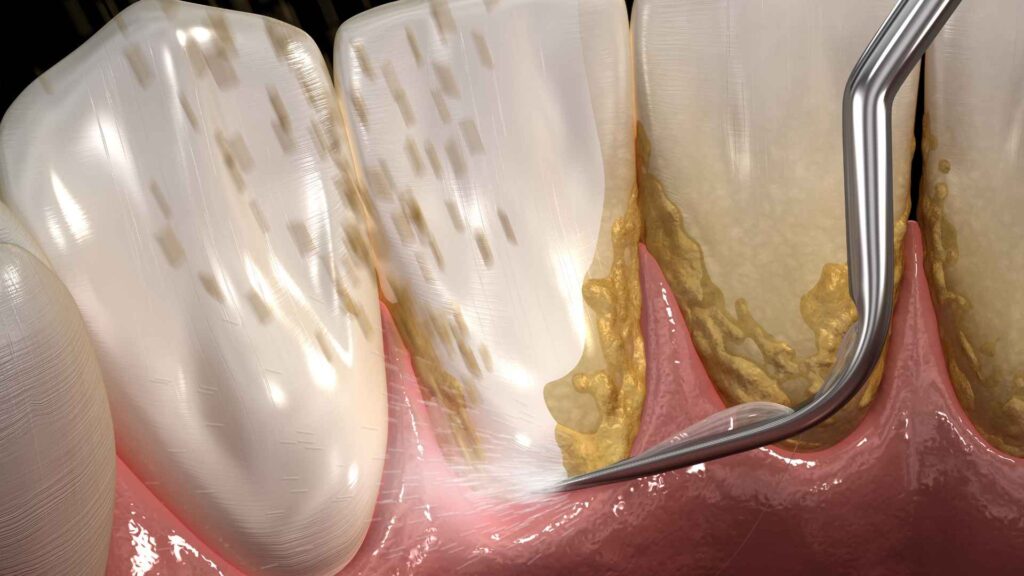
Plaque is a sticky film of bacteria that continuously forms on teeth, particularly after eating. It is composed of food particles, bacteria, and saliva. Overconsumption of foods high in sugar and starch can increase plaque formation. If not removed properly, plaque can harden into tartar (calculus), which can only be removed by a dental professional.
Plaque is usually colourless or pale yellow, and commonly forms along the gum line, between teeth and within the grooves of tooth surfaces. Plaque that forms between teeth is difficult to clean, and can lead to issues such as:
- Gum inflammation and bleeding
- Tooth decay between teeth
- Halitosis (bad breath)
- Progression to periodontal disease (gingivitis or periodontitis)
What Are Interdental Brushes?
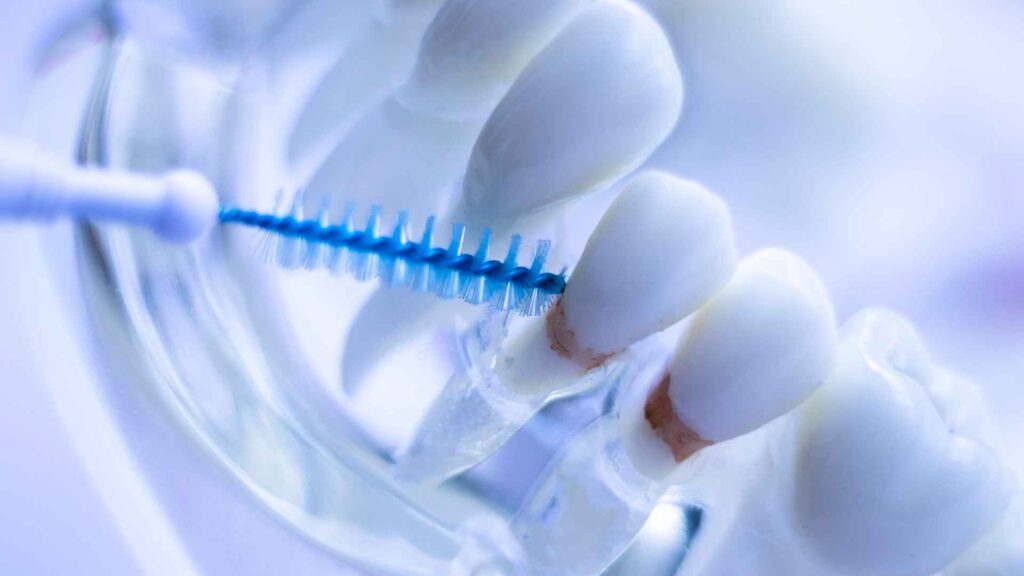
Interdental brushes are small, cylindrical or cone-shaped brushes designed to clean between teeth. The bristles are attached to a thin wire frame, and are available in various sizes, usually labelled 1,2,3,4 0r 5. This allows users to select the most suitable option size for the interdental spaces. They are often easier to use than floss, and remove food debris and bacteria through gentle cleaning, which can make it more effective than floss in certain interdental spaces.
How Interdental Brushes Help Remove Stubborn Plaque
The design of interdental brushes allows them to reach tight interdental spaces to gently remove trapped food particles and bacteria. The brushes are flexible, and can adapt to the shape of each interdental space.
Some key benefits from using interdental brushes are:
- Effective removal of plaque buildup
- Reduced gum inflammation and bleeding
- Supports the prevention of tooth decay and gum disease
- Improved overall oral hygiene when used daily
- Helps reduce bad breath caused by plaque buildup between teeth
- Suitable for cleaning around orthodontic appliances and dental implants
How to Use Interdental Brushes Correctly
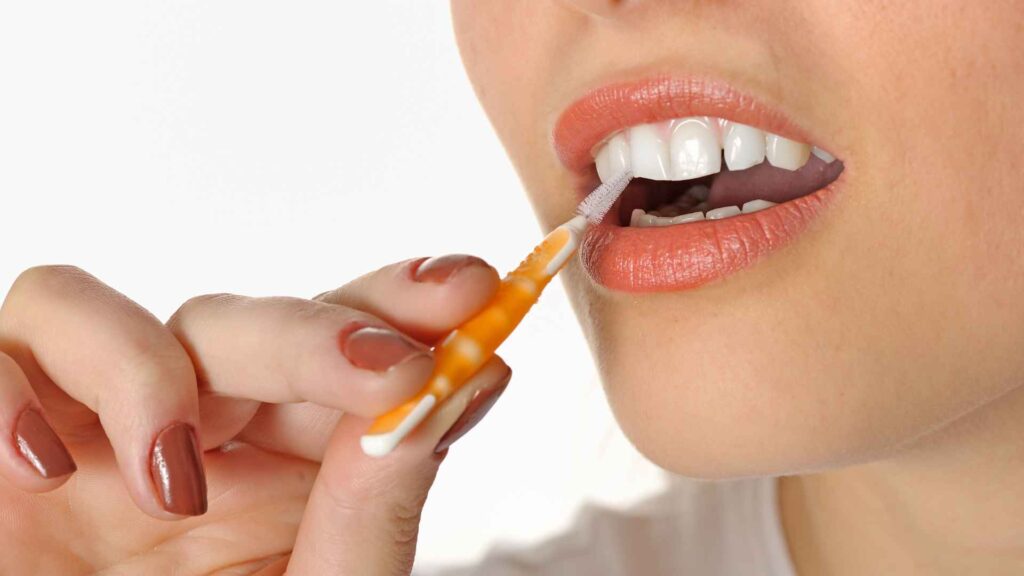
- Choose the correct interdental brush size suitable for your interdental spaces.
- Gently insert the brush between your teeth.
- Gently move the brush back and forth once or twice in a sweeping motion to remove plaque.
- Use different interdental brush sizes if required.
- Use once or twice daily
- Replace every one to two weeks.
Avoid bending or forcing the brush. Do not apply toothpaste to the brush before using.
You may experience mild bleeding in the first two weeks.
Who Should Use Interdental Brushes?
Interdental brushes are ideal for:
- Patients undergoing orthodontic treatments such as fixed braces.
- Patients with bridges, crowns, or implants.
- Individuals prone to plaque accumulation or gum disease with gum pockets and food packing.
- Individuals seeking more comprehensive oral care beyond brushing alone.
Interdental Brushes vs Dental Floss: Which Is Better?
Both tools can be effective in removing interdental plaque when used correctly.
- Dental floss is suitable for very tight spaces where brushes cannot fit.
- Interdental brushes are suitable for wider gaps and for cleaning around braces, implants, and areas with gum recession.
However, a combination of both can provide optimal interdental cleaning.
When to Visit Your Dentist for Professional Cleaning
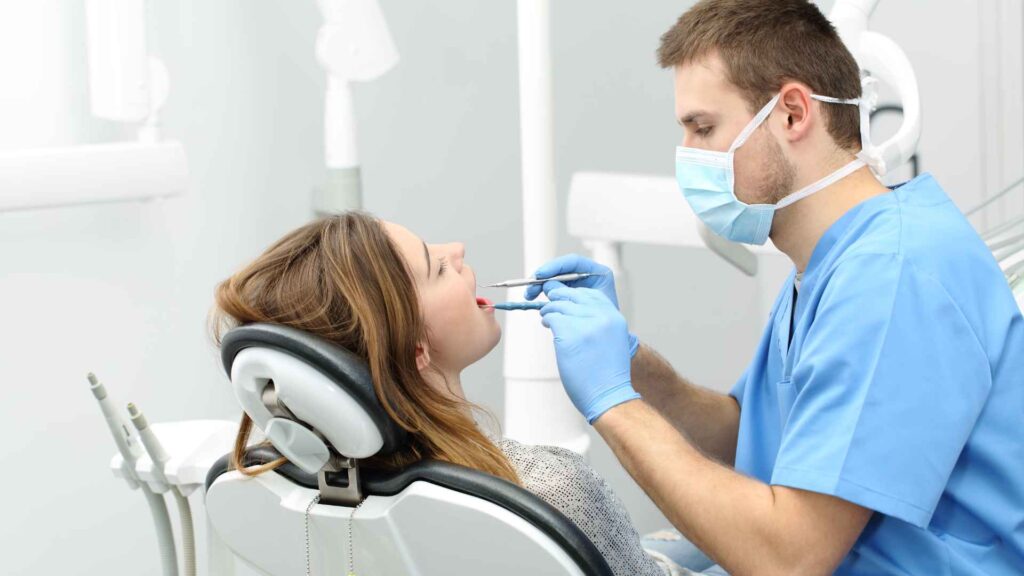
You may need professional cleaning if you are experiencing the following:
- Visible tartar (calculus) buildup
- Persistent bleeding gums
- Gum recession
- Periodontitis
- Persistent bad breath
At Dental Square, we recommend professional dental checkups and cleaning every six months to one year, to support optimal oral health and hygiene.
Interdental brushes play a key role in removing plaque and debris in hard-to-reach areas between teeth. They can significantly help improve your oral hygiene and help reduce the risk of oral concerns such as calculus and gum disease. Investing in proper interdental care can make a significant impact on long-term oral health. To receive personalised advice and guidance, book your next check-up with Dental Square.